BHUDEVI
भूमि
THE SIGNATURE BRAND STORY
Worlds Worth Protecting — Land, Culture, and Community
― ◆ ―
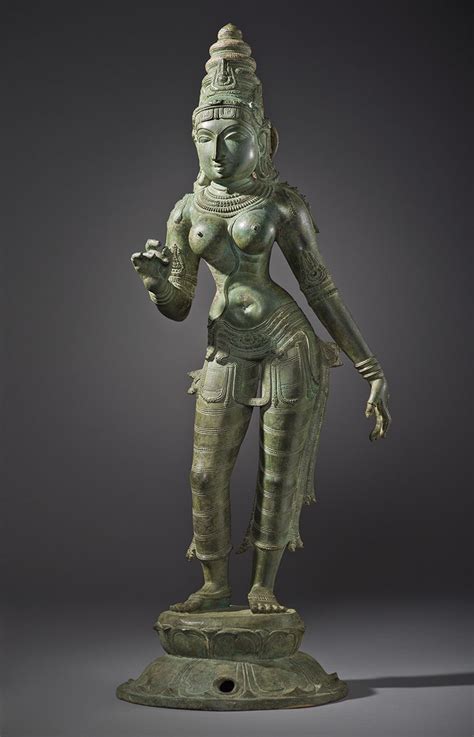
Bhudevi — the earth goddess who holds healing herbs, a water vessel, and a blue lotus. She is the Earth personified.
Bhudevi
Before there were borders, before there were empires, before the first plow broke the first field — there was Bhudevi.
In the ancient Sanskrit tradition, Bhudevi — also known as Bhumi (भूमि) — is the Hindu earth goddess who personifies the Earth itself. Not merely its surface, but its soul. She is depicted holding a blue lotus, symbol of purity rising from dark waters. A water vessel, for the rivers and rains that sustain all life. A bowl of healing herbs, for the medicine the land has always offered freely. And a pomegranate — bursting with seeds, heavy with the promise of fertility, nourishment, and sacred abundance.
In the old stories, when the Earth is oppressed by corrupt and careless forces — when rivers are poisoned, forests felled, soil stripped to dust — Bhudevi appeals to Vishnu, the great preserver, for protection. And he descends, in one form or another, to restore the balance.
― ◆ ―
This is not mythology. This is happening now.
The land is being lost — not to gods and demons, but to indifference, extraction, and the quiet violence of treating the Earth as inventory. The ancient trees are being felled. The rivers are carrying chemicals instead of salmon. The soil that once fed civilizations is being measured only in yield-per-acre, never in years-of-life-remaining.
Bhudevi was founded as an answer to the same ancient question the goddess asked millennia ago:
Who will stand for the earth when she cannot stand for herself?
― ◆ ―
Where the Story Begins
A convergence of worlds, carried across oceans and generations.
Every brand has an origin point. For most, it is a market opportunity. For Bhudevi, it was a lineage — a convergence of cultures, continents, and convictions that made this work not a choice, but an inevitability.
Arlette Ottow carries a Dutch Indonesian heritage shaped by the Indo-European diaspora — a family rooted in craftsmanship, in cultural stewardship, in the belief that land is not merely where you live, but how you live. Her ancestor, Carl Wilhelm Ottow, arrived at Mansinam Island in Indonesia on February 5, 1855. The words he spoke as he stepped ashore have echoed through the family ever since:
” In Gottes Namen betraten wir das Land.” In Gods Name we set foot on the land.

Mansinam Island, West Papua — where an ancestor’s reverence for land became a family’s enduring inheritance.
That single act of reverence — naming the land as sacred ground before anything else — planted a seed that would travel across oceans, through the Caribbean, through Europe, through the United States, through generations of women and men who understood that to arrive somewhere is to accept a responsibility.
Twenty-five years across four continents. Working in different cultures and environments where she witnessed what luxury could be when it honored place — and what it became when it didn’t. Leading foundations with her father in Netherlands, Indonesia and later Curacao, where she saw, firsthand, what community could become when land and culture were protected, and what was lost when they were not.
She watched organic farms disappear. Not to drought, but to development deals. She watched artisan traditions — the jamu healers, batik makers, the seed keepers — become “content” for tourism brochures while the practitioners themselves were pushed to the margins. She watched coastal ecosystems degrade not from hurricanes, but from decades of quiet, bureaucratic indifference.
Bhudevi was born not as a business plan. Not as a brand strategy. Not as a pivot.
It was born as a refusal to look away.
― ◆ ―
What Bhudevi Believes
These are not slogans. They are the soil from which everything else grows.
Before the first property was scouted, before the first seed was planted, before the first guest was welcomed — four convictions were written down. They have never changed. They are the founding principles from which every decision, every partnership, every design, and every offering flows.
LAND IS NOT AN ASSET. IT IS AND ANCESTOR.
The land was here before us. It holds the memory of every rainfall, every root system, every generation that tended it. To treat it as a line item on a balance sheet is to misunderstand its nature entirely. Bhudevi begins with the land — listening to it, learning from it, restoring what has been taken.
CULTURE IS NOT CONTENT. IT IS A LIVING MEMORY OF A PLACE.
When a Javanese healer prepares jamu, she is not performing. She is practicing a tradition older than any corporation on Earth. When an Indigenous elder shares the name of a plant, he is entrusting you with knowledge that survived colonization, displacement, and erasure. Culture is not something you curate for a guest experience. It is the root system of a place, and it must be honored as such.
COMMUNITY IS NOT AN AUDIENCE. IT IS THE IMMUNE SYSTEM OF THE ECO SYSTEM.
A healthy ecosystem does not have spectators. It has participants — farmers, artisans, educators, healers, builders — each contributing to the vitality of the whole. When a community is strong, the land is protected. When the land is protected, the community thrives. This is not theory. This is biology.
HOSPITALITY IS NOT A SERVICE. IT IS THE ART OF MAKING THE LAND SPEAK TO THOSE WHO ARRIVE.
A great host does not simply provide comfort. A great host introduces you to a place — its seasons, its flavors, its silence, its stories. The guest leaves not merely rested but changed. That is the hospitality Bhudevi practices: not escape from the world, but deeper entry into it.
― ◆ ―
Four Pillars — One Living System
These are not departments. They are organs of a single living body.
Bhudevi’s work is organized around four pillars — not as separate divisions, but as an integrated philosophy. Each pillar depends on the others. Each strengthens the others. Remove one, and the system fails.
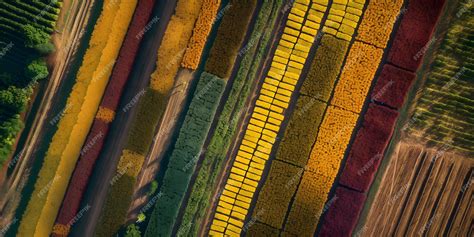
Regenerative land stewardship — where conservation, agriculture, and ecological restoration become one practice.
| I. Land Conservation, restoration, and regenerative stewardship. Protecting ancient ecosystems and restoring degraded landscapes through science-informed, culturally rooted land care. Every acre Bhudevi touch is measured not by its market value, but by its ecological vitality — the health of its soil, the diversity of its species, the integrity of its watersheds. The land does not belong to us. We belong to it. |
| II. Culture Honoring the living traditions of every place Bhudevi touches. From jamu workshops rooted in Javanese healing traditions to Indigenous ethnobotanical knowledge held by communities in North Carolina — culture is not decoration. It is the root system. Bhudevi works alongside tradition holders, not above them, ensuring that cultural knowledge is preserved, practiced, and passed forward with integrity and sovereignty. |
| III. Community Bridging organic farmers, local artisans, and hospitality partners into an ecosystem of mutual benefit. Economic sovereignty, not extraction. Bhudevi’s supply chains are relationships. Its partnerships are built on equity, transparency, and shared purpose. When a community prospers, it protects its land. When land is protected, the community endures. This is the cycle Bhudevi serves. |
| IV. Hospitality Guest experiences that transform, not consume. Where every meal tells the story of the soil it came from. Every walk reveals the intelligence of the forest. Every moment of stillness reconnects the visitor to what the land has always known. Bhudevi hospitality is not luxury as spectacle — it is luxury as intimacy with place. The guest arrives as a visitor. They leave as a witness. |
These four pillars are not a framework imposed upon the work. They are the work itself — the living architecture of a system that regenerates what it touches. Land nourishes culture. Culture strengthens community. Community sustains hospitality. And hospitality, done well, sends people back into the world as advocates for the land.
― ◆ ―
The Work
Where philosophy meets practice — the living expressions of Bhudevi’s mission.
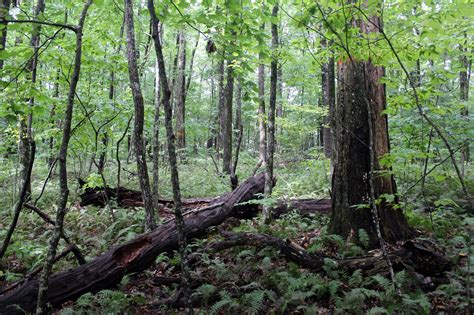
The forests of North Carolina — ancient, resilient, and worth every effort to protect.
Bhudevi Signature Resort — A regenerative luxury destination where land stewardship, conscious hospitality, and sustainable agriculture operate as a unified system. Not a hotel with a garden. Not a resort with a sustainability page. A place where every room, every meal, every trail, every hour of silence is an expression of the land’s own intelligence — designed to heal the guest and the ground beneath them simultaneously.
The Botanical Defense Program — Active Ecological Protection in practice. Habitat restoration for native and endangered species. Buffer zones between development and wilderness. Heritage seed banking to preserve the genetic memory of ancestral crops. Documentation of healing traditions before they vanish. Ecological monitoring that treats the land as a patient deserving ongoing care, not a resource awaiting extraction.
Bhudevi Nature’s Rights Curaçao — A grassroots movement for land, food, and cultural sovereignty in the Caribbean. Born from years of foundation work on the island, this initiative advocates for the legal recognition of nature’s inherent rights, the protection of traditional food systems, and the empowerment of local communities to become stewards of their own landscapes. The Caribbean’s beauty has long been treated as a product. This work insists it is a birthright.
Regenerative Hospitality Consulting — Helping boutique hotels, eco-resorts, and independent properties rediscover their relationship with place. Not greenwashing. Not certification checklists. A deep, systemic reimagining of what hospitality can be when it starts with the land — its seasons, its species, its stories, its limits — and builds the guest experience from there. For properties that are ready to stop performing sustainability and start practicing it.
― ◆ ―
A World Worth Protecting

The blue lotus — rising from dark water into light. The symbol Bhudevi carries forward.
Return, for a moment, to the beginning.
Bhudevi, the goddess, holds a blue lotus in one hand and a water vessel in the other. Healing herbs and a pomegranate. She does not carry weapons. She carries medicine, nourishment, and the quiet certainty that life renews itself — if given the chance.
When the Earth was oppressed by forces that saw her only as something to use, Bhudevi did not fight. She appealed. She called out for protection, for balance, for someone — anyone — to remember what the land was for.
That call has not stopped.
It echoes in the last old-growth forests of the Southeastern United States. It echoes in the coral reefs of Curaçao. It echoes in the soil of every farm that was paved into a parking lot, every river that was rerouted for convenience, every tradition that was allowed to die because no one thought to ask an elder to teach it one more time.
― ◆ ―
We are not waiting for an avatar.
We are building the answer ourselves —
one acre, one seed, one community at a time.
Bhudevi is not a corporation. It is a covenant — between the people who do this work and the land that makes it possible. Between the guests who arrive seeking beauty and the communities whose beauty has always been there, waiting to be recognized rather than consumed.
Every project we undertake, every partnership we build, every guest we welcome is guided by a single question: Does this serve the land, the culture, and the community — or does it only serve us?
If the answer is the latter, we do not proceed. That is not a marketing position. It is a promise.
― ◆ ―
If this story resonates with yours,
we invite you to continue it with us.
BHUDEVI
Worlds Worth Protecting
bhudeviworld@outlook.com
bhudeviworld.com
Wilmington, North Carolina
◆ ◆ ◆