Bhudevi- Research Center
Where Science Meets Stewardship
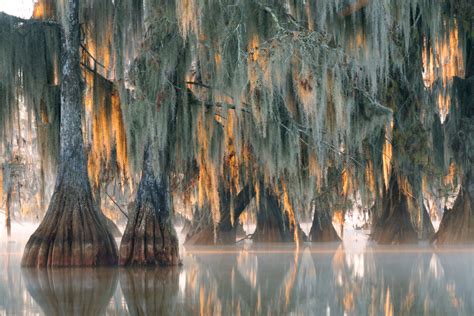
Ancient bald cypress along the Black River corridor — some over 2,600 years old — standing as living witnesses to millennia of ecological resilience.
There is a river in southeastern North Carolina where time moves differently. The Black River flows dark and unhurried, its tea-colored blackwater stained by tannins from the ancient forests that line its banks. Here, bald cypress trees (Taxodium distichum) rise from the floodplain like cathedral columns — some of them up to 2,624 years old, making them among the oldest known living trees on Earth. Their buttressed trunks have stood through the rise and fall of empires, through ice storms and hurricanes, through centuries of silence and song.
This is the landscape that called Bhudevi into being.
Bhudevi’s Botanical Defense Program is our commitment to ensuring these ecosystems are not merely preserved — but restored, deepened, and woven into the living fabric of community. It is both our ecological backbone and our promise to the land: that what has endured for millennia will not be lost on our watch.
Founded by Arlette Ottow, a Dutch-Indonesian woman with more than 25 years of experience in regenerative hospitality, land stewardship, and cross-cultural conservation across four continents, Bhudevi is not an organization that studies the land from a distance. We live on it. We listen to it. We defend it.
Why Botanical Defense
We chose the word defense deliberately. This is not passive conservation — not a plaque on a fence post, not a line on a map. Defense means actively protecting threatened habitats, rebuilding degraded corridors, and creating living barriers against extraction, erosion, and ecological collapse. It means showing up, season after season, with seeds in our hands and intention in our hearts.
The conservation gap in this region is real and urgent. The Nature Conservancy has protected approximately 16,000 acres along the Black River — vital, foundational work. But hundreds of ancient cypress stands remain unprotected and vulnerable to logging, biomass harvesting, and the slow encroachment of sea-level rise. The lands between protected parcels are fragmented, often privately held, and exposed.
The Southeast Conservation Blueprint (SECAS) identifies priority conservation areas using 68 natural and cultural resource indicators across terrestrial, freshwater, and marine ecosystems. Bhudevi’s work aligns with this framework — but we go further. We add the cultural and community dimensions that institutional conservation often overlooks: the knowledge of the people who have lived with these plants for generations, the healing traditions embedded in every leaf and root, the relationships between land and people that no indicator can fully measure.
Botanical defense is conservation with its roots in the ground and its arms around the community.
The Five Pillars of Botanical Defense
The Botanical Defense Program is built on five interconnected pillars — each one a living practice, not a policy document. Together, they form a complete system of ecological care: restoring what has been lost, protecting what remains, remembering what the land has always known, and listening for what comes next.
Pillar 1: Habitat Restoration
“Returning the land to its own language”
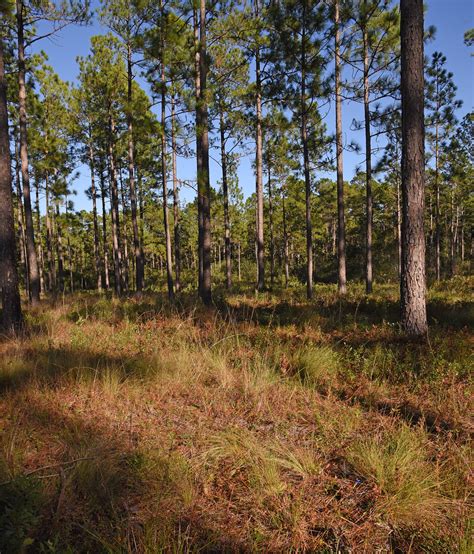
Longleaf pine savanna — once spanning 90 million acres across the Southeast, now reduced to less than 3% of its original range. Restoration is both ecological imperative and act of remembrance.
Habitat restoration at Bhudevi begins with a simple principle: the land already knows what it wants to be. Our work is to remove the obstacles and reintroduce the species that belong here. Along the Black River corridor, we focus on restoring native plant communities using bioengineering techniques rooted in riparian science — live stakes and dormant cuttings of willow and dogwood, coir fiber rolls for toe-of-slope protection, and layered planting in functional zones.
The planting follows the river’s logic. In the toe zone, closest to the waterline: sedges and rushes that hold the soil against current. In the bank zone: willows, silky dogwoods, and alders that stabilize slopes and filter runoff. In the floodplain: bald cypress, water tupelo, red maple, and swamp chestnut oak — the towering canopy species that define this landscape. Per USDA Conservation Buffers guidelines, buffer widths of 100 feet or more maximize habitat benefits, and Bhudevi designs all restoration plantings to meet or exceed this standard.
Beyond the river, our upland strategy centers on longleaf pine (Pinus palustris) savanna restoration. Longleaf pine ecosystems once covered 90 million acres across the American Southeast — one of the most biologically rich temperate ecosystems on the planet. Today, less than 3% of that original range remains. Bhudevi is committed to restoring longleaf habitat on our conservation parcels through prescribed fire management, native groundcover seeding, and the patient, year-by-year work of letting the savanna return.
Pillar 2: Ecological Buffer Zones
“A living wall between extraction and abundance”
Buffer zones are where protection becomes physical — where the land itself draws a boundary. Bhudevi establishes vegetated buffer zones around every conservation parcel, designed to filter pollutants, stabilize banks, slow floodwaters, and create unbroken habitat corridors for wildlife movement.
Our buffer design follows the USDA three-zone forest buffer model:
| Zone | Description | Primary Function |
| Zone 1 — Inner Forest | Undisturbed native forest closest to the waterway; minimum 15 feet wide | Streambank stabilization, shade, woody debris input, aquatic habitat |
| Zone 2 — Managed Forest | Managed native hardwoods and softwoods; 20–60 feet wide | Nutrient uptake, sediment filtration, wildlife corridor, sustainable harvest |
| Zone 3 — Outer Grasses & Shrubs | Native grasses, wildflowers, and shrubs; 20–30 feet wide | Runoff filtration, pollinator habitat, visual transition boundary |
But Bhudevi’s buffers serve a dual purpose beyond the ecological. They are also a visual, sensory boundary — a threshold that marks the transition from developed land to sacred ground. Walking into a Bhudevi buffer zone, you feel the air change. The light softens. The sound shifts from highway to birdsong. This is intentional.
Within our buffer zones, we install interpretive trails and gathering spaces where guests and community members can witness restoration in progress. These are not manicured paths — they are working landscapes, alive with the beautiful disorder of a forest rebuilding itself.
Pillar 3: Heritage Seed Banking
“The memory of the forest, held in trust”

Heritage seed banking — collecting, preserving, and redistributing the genetic memory of native plant communities for generations to come.
Every seed is a story. Every seed is a promise that the forest made to the future. Bhudevi’s Heritage Seed Banking program partners with regional seed conservation networks to collect, store, and redistribute seeds of native and rare plant species from the Black River watershed and the broader coastal plain of North Carolina.
Our inspiration draws from some of the most important seed conservation work happening today. The Southeastern Grasslands Institute, through the Seeds of Success program with the Bureau of Land Management, has made over 1,034 seed collections to date, banked 184 rare species, and reintroduced 354 collections across the region. The North Carolina Botanical Garden maintains one of the Southeast’s most important native seed repositories. And Canada’s Indigenous Seed Collection Program, launched in 2022, has become a guiding model for us — supporting Indigenous-led seed collection, long-term banking, and species reintroduction, and recognizing Indigenous peoples as “the original ecosystem architects.”
Bhudevi’s seed bank focuses on species native to this watershed and coastal plain — species that define the ecological identity of this place:
- Bald cypress (Taxodium distichum) — the ancient sentinel of the Black River
- Atlantic white cedar (Chamaecyparis thyoides) — increasingly rare in southeastern swamps
- Venus flytrap (Dionaea muscipula) — endemic to a 75-mile radius of Wilmington, found nowhere else on Earth
- Longleaf pine (Pinus palustris) — keystone of the vanishing savanna
- Carolina lily (Lilium michauxii) — a jewel of the woodland understory
- Spider lily (Hymenocallis caroliniana) — fragrant, fleeting, tied to floodplain rhythms
- Swamp rose (Rosa palustris) — a reminder that beauty and resilience are the same thing
The seed bank is not merely scientific — it is cultural. It is an act of memory. It says: we remember what grew here, and we will not let it be forgotten.
| “In some Native languages, the term for plants translates to ‘those who take care of us.'” — Robin Wall Kimmerer, Braiding Sweetgrass |
Pillar 4: Healing Traditions
“The pharmacy of the forest floor”
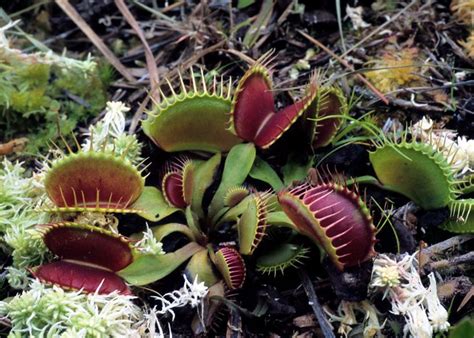
The Venus flytrap (Dionaea muscipula) — endemic to a small radius around Wilmington, NC — is one of the world’s most extraordinary botanical treasures and a flagship species in Bhudevi’s conservation efforts.
Long before pharmacies lined the highways, the forest floor was the apothecary. North Carolina is home to one of the richest ethnobotanical traditions on the continent, carried by the Haliwa-Saponi, Coharie, Waccamaw Siouan, and Lumbee communities whose plant knowledge stretches back millennia. The NC Native Ethnobotany Project documents traditional uses of native plants for healing, nourishment, and ceremony — a living archive of relationship between people and the green world.
Bhudevi honors this heritage through direct practice. Our Healing Traditions pillar includes herbal medicine gardens planted with native medicinal species, jamu workshops drawing from Arlette’s Indonesian heritage, seasonal apothecary programs, and partnerships with local Indigenous knowledge keepers who guide our work with generosity and authority.
Key species in our healing gardens include:
- Sassafras (Sassafras albidum) — used for centuries in teas, poultices, and aromatic remedies
- Witch hazel (Hamamelis virginiana) — one of North America’s most enduring medicinal plants
- American beautyberry (Callicarpa americana) — traditionally used as an insect repellent and fever reducer
- Sweetgum (Liquidambar styraciflua) — its resin and bark used in balms and respiratory remedies
- Pawpaw (Asimina triloba) — North America’s largest native fruit, deeply embedded in forest food traditions
This pillar is where Arlette’s own story becomes visible. In Indonesia, jamu — traditional herbal medicine made from roots, barks, flowers, and leaves — is not an alternative practice. It is daily life. It is the grandmother in the market grinding turmeric and tamarind before dawn. It is medicine that lives in the kitchen, not behind a counter. At Bhudevi, we bridge this living Indonesian tradition with North Carolina’s own deep botanical heritage, creating a space where healing knowledge from different continents can meet, learn from each other, and grow.
Pillar 5: Ecological Monitoring
“Listening to what the land is telling us”
Restoration without monitoring is a story without a narrator. Bhudevi implements continuous ecological monitoring across all conservation parcels and buffer zones, using a combination of methods that blend scientific rigor with community participation.
Our monitoring program includes:
- Acoustic monitoring — recording bird, bat, and amphibian vocalizations to track species presence and seasonal patterns
- Water quality sampling — measuring turbidity, dissolved oxygen, pH, nitrogen, and phosphorus levels in the Black River and its tributaries
- Vegetation surveys — documenting species composition, canopy cover, and regeneration success in restoration areas
- Community science programs — engaging guests, students, and neighbors in data collection through guided bio-blitzes and seasonal species counts
Our monitoring framework aligns with the Southeast Conservation Adaptation Strategy (SECAS) and its Blueprint, which uses 68 indicators across terrestrial, freshwater, and marine ecosystems to track regional conservation progress. Bhudevi contributes data to these regional networks — ensuring that our local observations feed into the larger story of southeastern conservation.
But we also track what most monitoring programs do not. We track cultural indicators — community engagement, knowledge transfer between generations, the number of people who return to the land season after season, the health of the relationships between land and people. These are not metrics that fit neatly into a spreadsheet. They are the indicators that matter most.
“We measure not only what grows, but who gathers, who teaches, who returns.”
The Land We Protect
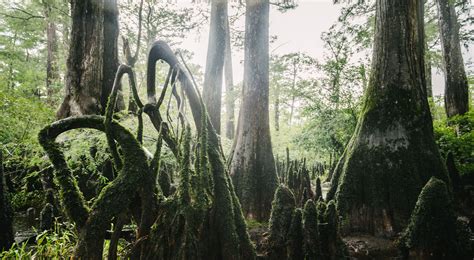
The Black River — designated an Outstanding Resource Water in 1994 — flows through one of the most ecologically significant corridors in the eastern United States.
The Black River received its Outstanding Resource Water designation in 1994, a recognition of its extraordinary ecological value and the purity of its flow. This designation offers some of the strongest water quality protections available under North Carolina law — but water quality alone does not protect the living community that depends on the river.
The Black River corridor is home to an extraordinary assembly of life. Atlantic sturgeon — ancient, armored fish that predate the dinosaurs — still navigate these waters. The Cape Fear spike mussel, one of the rarest freshwater mussels in North America, filters the river’s blackwater through its patient, essential work. Prothonotary warblers nest in the cypress hollows, their golden plumage a flash of sun against dark water. Northern long-eared bats hunt over the floodplain at dusk. Black bears move through the bottomland hardwoods. River otters slide along the banks, playing and fishing in the same currents their ancestors have known for thousands of years.
Every species that remains is a vote of confidence in the land’s memory. Every species we restore is our answer.
A Program Rooted in Culture
The Botanical Defense Program does not exist in a laboratory. It does not live behind a chain-link fence or inside a grant report. It is a living, breathing practice — embedded in guest experiences, community partnerships, and the seasonal rhythms that give the land its pulse.
At Bhudevi, the Botanical Defense Program is woven into the Four Pillars that guide everything we do: Land, Culture, Community, and Hospitality. These are not separate departments. They are one continuous circle.
| How Guests Experience the Botanical Defense Program Guests at Bhudevi don’t just visit — they participate. Our seasonal programming invites guests into the living work of botanical defense: • Seed collection walks — guided forays into the forest to gather seeds of native species for our heritage seed bank • Seasonal plantings — hands-on planting days in riparian restoration zones, guided by ecological staff • Harvest rituals — gathering medicinal herbs and seasonal fruits, learning their stories and their uses • Botanical workshops — jamu preparation, natural dye making, herbal salve workshops, and plant identification walks • Evening bio-blitzes — community science events with acoustic monitoring and species identification This is how Bhudevi lives its values. The program is not something we do alongside hospitality — it is hospitality. It is the invitation to belong to a place, not just visit it. |
When a guest kneels in the floodplain mud to press a bald cypress seedling into the earth, they are not performing a symbolic act. They are participating in restoration that will outlive them. They are placing a living thing into the care of a community that will tend it for generations. That is the deepest hospitality we know how to offer: the chance to leave something behind that grows.
Partner with the Program
The Botanical Defense Program is an invitation — to foundations, conservation investors, land trusts, researchers, and anyone who understands that protecting land is not charity. It is the wisest investment of our generation.
Every acre restored, every seed banked, every buffer zone planted is a compounding return — not in quarterly earnings, but in clean water, stable soil, carbon sequestration, biodiversity resilience, and the health of human communities downstream. These are returns that grow with time, not against it.
Bhudevi seeks partners across four categories:
| Partnership Category | Focus Area | What Your Support Enables |
| Conservation Easement Partners | Land protection | Permanent protection of critical habitat parcels along the Black River corridor and coastal plain |
| Seed Banking Sponsors | Heritage seed conservation | Collection, processing, storage, and redistribution of native and rare seeds from the watershed |
| Research Collaborators | Ecological monitoring & science | Long-term data collection, academic partnerships, and contribution to regional conservation networks |
| Community Program Funders | Culture & community engagement | Healing traditions workshops, youth ecology programs, Indigenous knowledge partnerships, and guest programming |
We are not looking for partners who want their name on a building. We are looking for partners who want their legacy in a living forest — in a seed bank that outlasts them, in a river corridor that flows clean because they chose to act. If that resonates, we would like to hear from you.
Begin the Conversation
The Botanical Defense Program is growing — and there is room for you in this work. Whether you are a conservation funder, a land trust exploring partnership, a researcher seeking a field site, or simply someone who believes that defending the forest is the most important thing we can do right now, we welcome your inquiry.
Email: bhudeviworld@outlook.com
Website: bhudeviworld.com
Location: Wilmington, North Carolina
“The forest does not wait. Neither do we.”
Bhudevi — Land. Culture. Community. Hospitality.
Founded by Arlette Ottow
This document contains proprietary information belonging to Bhudevi and is intended solely for the use of the individual or entity to whom it is addressed. If you have received this document in error, please notify the sender immediately. Unauthorized use, disclosure, or distribution of the material contained herein is prohibited. © 2026 Bhudevi. All rights reserved.