A Conservation Narrative for Partners and Aligned Investors
Wilmington, North Carolina · April 2026
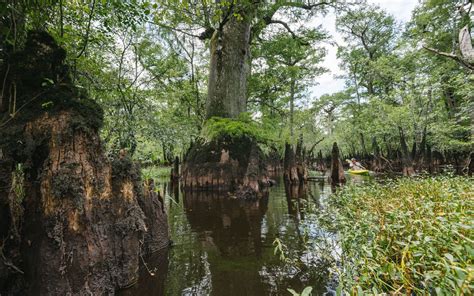
The Black River, southeastern North Carolina — one of the last ancient blackwater corridors on Earth.
There is a place in southeastern North Carolina where the water runs the color of strong tea. Where bald cypress trees rise from the stillness like columns of a cathedral no one built. Where Spanish moss hangs in veils so fine that the light passing through them feels older than the light anywhere else.
The Black River does not rush. It does not announce itself. It moves slowly through Sampson, Bladen, and Pender counties with the patience of something that has been here for millennia — because it has.
If you stand on its banks long enough, you begin to understand that this is not merely a river. It is a living archive. A record of drought and flood, of species that adapted and species that vanished, of civilizations that rose and fell while these trees kept growing. Their rings hold the memory of this continent in a way no library can.
And yet — what is ancient and irreplaceable is not yet fully protected.
Hundreds of acres of old-growth cypress forest remain in private hands, vulnerable to logging, development, and the slow erasure of indifference. The oldest living things east of the Rocky Mountains stand today without guaranteed permanence.
Bhudevi was founded to stand in the gap.
A River That Remembers
The Black River begins where two creeks converge — Coharie Creek and Six Runs Creek — in the heart of Sampson County. From there it winds some sixty miles through the coastal plain, gathering the tannins of decaying leaves and bark that give it that signature dark mirror. It meets the Cape Fear River fourteen miles north of Wilmington, merging ancient water with tidal estuary.
In 1994, the State of North Carolina designated the Black River an Outstanding Resource Water — a recognition of its extraordinary ecological value. But it was what grew in that water that would change the way scientists understood time in the eastern United States.
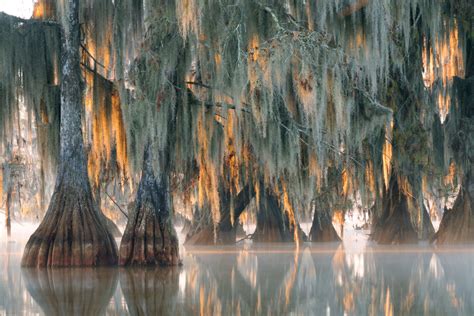
Ancient bald cypress along the Black River — some have stood for over two thousand years.
In the 1980s, Dr. David Stahle of the University of Arkansas arrived on the Black River with a coring tool and a hunch. A dendrochronologist — a reader of tree rings — Stahle suspected that the massive bald cypress trees growing in these swamps might be far older than anyone realized. What he found redefined the landscape.
The bald cypress is the fifth oldest tree species on Earth. And the specimens along the Black River were not merely old. They were ancient. Many exceeded one thousand years. Some surpassed fifteen hundred. A number reached beyond two thousand.
And then there was one tree — catalogued as BLK69, later given the name Methuselah — whose innermost ring dated to at least 605 BCE.
| 2,624 years. This single bald cypress was a seedling when the Neo-Babylonian Empire ruled Mesopotamia. It was already centuries old when Rome was founded. It has lived through every era of recorded human history, and it is still alive, standing in dark water in a North Carolina swamp. |
These trees survived the historic logging that stripped the southeastern United States of its virgin timber in the eighteenth and nineteenth centuries. Their salvation was architectural: their trunks were hollow, their bases wildly buttressed. They were, by the standards of the lumber industry, worthless. And so they were left standing.
What the loggers discarded, science eventually recognized as irreplaceable. The growth rings of these ancient cypress contain one of the longest continuous climate records in North America — stretching back more than two and a half millennia. It was from these rings that Stahle and his colleagues reconstructed the droughts that coincided with the disappearance of the Lost Colony at Roanoke in the 1580s and the catastrophic early years of the Jamestown settlement in the 1600s.
The trees did not just witness history. They recorded it.
What Lives Here
The Black River corridor is not a single ecosystem. It is a mosaic — bald cypress and tupelo gum swamps giving way to bottomland hardwood forests, with occasional upland ridges of longleaf pine. Every layer holds life.
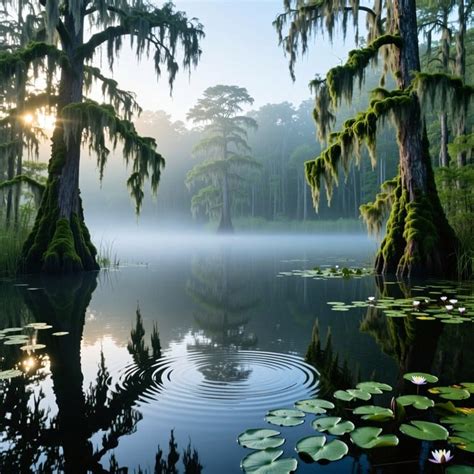
Cypress and tupelo swamps along the Black River, draped in Spanish moss — habitat for hundreds of species.
The canopy belongs to the cypress and the tupelo, draped in curtains of Spanish moss that soften every edge. Beneath them, the water moves slowly enough to hold reflections so perfect they feel like a second world. In spring, swamp roses bloom along the margins, and the air fills with the songs of migratory birds traveling ancient flyways — neotropical songbirds that have been making this journey for longer than there have been nations to cross.
The prothonotary warbler nests in the cavities of old cypress. The yellow-throated vireo sings from the mid-canopy. Egrets stand motionless in the shallows. Ospreys circle overhead, hunting the same waters that hold the Santee chub, the broadtail madtom, and — in the deeper channels — the Atlantic sturgeon and the shortnose sturgeon, both federally listed species whose lineage predates the dinosaurs.
Beneath the surface, the Cape Fear spike — a freshwater mussel found nowhere else on Earth — filters the dark water with the quiet diligence of a creature that has never needed to be noticed to matter.
Black bears move through the bottomland forests. River otters slide between cypress knees. Bobcats hunt the upland edges. In the lower reaches, where the river widens toward the Cape Fear, American alligators sun themselves on fallen logs — the northernmost edge of their range, a reminder that this corridor spans climatic worlds.
And in the hollows of the most ancient trees, the threatened northern long-eared bat roosts in darkness, raising its young in chambers that have existed for a thousand years.
Summer brings the spider lilies — white and delicate, blooming in the current as if to prove that even a blackwater river can hold light.
This is not a museum. Everything here is alive, breeding, migrating, adapting. The Black River corridor is a working ecosystem operating at a pace and scale that humbles every human timeline.
What Is at Risk
The conservation story of the Black River is, at first glance, encouraging. The Nature Conservancy has protected over sixteen thousand acres on and adjacent to the Black River floodplain, including approximately three thousand acres where millennium-old trees still stand. It is one of the most significant freshwater conservation investments in the southeastern United States.
But the story is not finished. And the gap between what is protected and what remains at risk is wider than most people realize.
Recent research by Dr. Stahle and the Ancient Bald Cypress Consortium has revealed that hundreds of additional acres of ancient cypress forest — trees well over a thousand years old — remain on unprotected private land. These stands are not hypothetical. They have been cored, dated, and mapped. They are real, and they are vulnerable.
| The threats are multiple and compounding: Logging and biomass harvesting — Any old-growth cypress stand not specifically protected by easement or ownership can be legally felled. Biomass energy operations do not distinguish between a fifty-year-old tree and a two-thousand-year-old one. Agricultural runoff — The Black River watershed is surrounded by row-crop agriculture, hog farming operations, and poultry facilities. Nutrient loading and chemical contamination degrade water quality across the corridor. Land development — As southeastern North Carolina’s population grows, development pressure on the coastal plain intensifies. Parcels adjacent to ancient stands change hands and change use. Sea level rise — Climate change-driven saltwater intrusion threatens the lower reaches of the river. Bald cypress are freshwater trees. As the salt line creeps upstream, the conditions that sustained these trees for millennia begin to shift. |
A proposal to create a Black River State Park from land currently held by The Nature Conservancy is under consideration by the State of North Carolina, but it has not yet been realized. The Ancient Bald Cypress Consortium submitted a nomination for National Natural Landmark status in November 2023 — an important symbolic recognition, but one that carries no binding legal protection.
The truth is plain: recognition is not the same as protection. Designation is not the same as defense.
The oldest trees on the eastern seaboard stand today in a patchwork of partial safeguards, and the land around them remains, in many cases, unprotected.
A Model Already in Motion
There is precedent for what must happen next. And it comes from within North Carolina itself.
Tim Sweeney, the founder and CEO of Epic Games, has quietly become one of the most significant private land conservationists in the American South. Over the past two decades, Sweeney has acquired more than fifty thousand acres across fifteen North Carolina counties — an area forty-seven times the size of Central Park. His strategy has been patient, deliberate, and remarkably effective: purchasing land during economic downturns, holding it, and then donating or selling it at steep discounts to conservation organizations equipped for long-term stewardship.
| Key milestones in Sweeney’s conservation work: 2016 — Donated 7,000 acres known as Box Creek Wilderness to the U.S. Fish and Wildlife Service. 2021 — Donated 7,500 acres in the Roan Highlands to the Southern Appalachian Highlands Conservancy — the largest private land donation in North Carolina history. |
“If you can protect land permanently, it will outlast any one person.”
— Tim Sweeney
Sweeney’s work has proven, conclusively, that private capital can be an instrumental force in achieving public environmental objectives. His donations have created protected wilderness that will endure for generations. The model works.
But there is a geographic reality worth noting. Sweeney’s acquisitions have focused primarily on the high-elevation mountain ecosystems of western North Carolina — the Appalachian ridges, the Roan Highlands, the Blue Ridge escarpment. These are extraordinary landscapes, and their protection is vital.
Yet the coastal plain — the low, flat, ancient ground where blackwater rivers wind through cypress swamps — remains underserved by private conservation capital. The oldest trees on Earth do not stand on mountaintops. They stand in swamps. And the swamps are still waiting.
Bhudevi does not compete with Sweeney’s vision. Bhudevi operates in the gap that his model reveals.
Where Bhudevi Stands
Bhudevi seeks to identify, protect, and regeneratively activate parcels along the Black River and adjacent blackwater corridors in southeastern North Carolina. This is our ground. This is the work we were built for.
But Bhudevi is not a traditional land trust, and our approach is not passive preservation. We believe that the most durable conservation is conservation that lives — that feeds people, employs people, and honors the cultural memory of the land it protects.
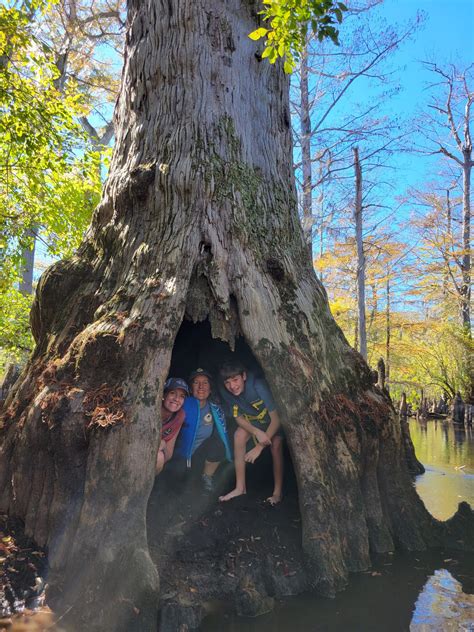
The Black River corridor — where conservation, culture, and community converge.
Our approach integrates four commitments — what we call the Four Pillars — and they are not abstract values hung on a wall. They are operational realities that shape every parcel we touch.
Land. We pursue conservation easements, direct acquisition, and partnerships with willing sellers to secure ecologically critical parcels. Every acre we protect is assessed for its ecological value, its connectivity to existing protected corridors, and its potential for active regeneration.
Culture. The Black River corridor is not empty land. It holds the layered cultural heritage of Indigenous peoples, Gullah-Geechee communities, and generations of rural families who have lived with this river. Bhudevi honors those traditions — in the plants we grow, the food we prepare, the stories we preserve.
Community. We partner with local farmers, herbalists, and land stewards. We create pathways for employment and education rooted in the landscape itself. Conservation without community is a locked gate. We build open doors.
Hospitality. We create immersive guest experiences that connect visitors to the land in ways that are meaningful, not extractive. When people eat food grown on regenerated soil, paddle through ancient cypress, and learn the botanical traditions of this place, they become stakeholders in its survival.
Every parcel Bhudevi protects becomes a site of active regeneration — not a fenced-off preserve, but a living demonstration that ecological health and human flourishing are not in opposition.
This is conservation that feeds people, employs people, and honors the cultural memory of the land.
The Botanical Defense Program
At the heart of Bhudevi’s conservation strategy is the Botanical Defense Program — a five-part framework for protecting and restoring the living systems of the Black River corridor. Each component is both practical and deeply rooted in the belief that defense of the land must be biological, cultural, and intergenerational.
I. Habitat Restoration
Replanting native bald cypress, longleaf pine, and bottomland hardwoods in degraded corridors. Where the forest has been cleared, we bring it back — not with monoculture plantings, but with the full complexity of species that belong here. We restore the architecture of the swamp itself.
II. Buffer Zone Creation
Establishing botanical barriers between agricultural operations and ancient stands. Dense plantings of native shrubs, grasses, and wetland species that filter runoff, absorb nutrients, and create physical and ecological distance between industrial land use and irreplaceable habitat. The buffer is not a wall. It is a living membrane.
III. Heritage Seed Banking
Preserving genetically distinct plant varieties native to the Black River basin. The seeds of this corridor carry thousands of years of adaptation — to this soil, this water, this climate. Losing them would be losing a biological library that cannot be rewritten. We collect, catalog, and safeguard what the land has spent millennia perfecting.
IV. Healing Traditions
Reviving herbal medicine practices rooted in the cultural heritage of southeastern North Carolina — Gullah-Geechee knowledge, Indigenous botanical wisdom, and colonial-era plant traditions that have been practiced on this land for centuries. The plants are not just ecological assets. They are cultural inheritance. We grow them, study them, and share them.
V. Ecological Monitoring
Partnering with institutions like the Ancient Bald Cypress Consortium for long-term tree-ring research, water quality assessment, and biodiversity tracking. Protection without knowledge is guesswork. We invest in the science that makes our stewardship precise, accountable, and adaptive over decades.
The Botanical Defense Program is not a plan on paper. It is a promise to the land.
Begin Where the River Begins
You have read this far because something in you recognizes what this place is. Not just what it contains — the ancient trees, the rare species, the irreplaceable climate record — but what it represents. A chance to do something that will outlast us all.
Bhudevi is not asking you to save the Black River. The river does not need saving. It has been here for millennia, and if left alone, it will be here for millennia more.
What we are asking is simpler and harder: stand with us in the gap between what is protected and what is not. Help us secure the land that holds the oldest living things in eastern North America. Help us build a model of conservation that is not passive, not extractive, but regenerative — rooted in culture, sustained by community, and open to everyone who comes with honest intentions.
This is not a transaction. It is a relationship — with the land, with the people who tend it, and with the future we are choosing to build.
Arlette Ottow, Founder
bhudeviworld@outlook.com
bhudeviworld.com
Wilmington, North Carolina
The oldest trees on Earth are still standing.
The question is whether we will stand with them.
This document is shared in confidence with prospective partners and aligned investors. © 2026 Bhudevi.